
Cast Iron vs Wrought Iron Hooks: What's the Real Difference?
Cast iron is poured into a mould, wrought iron is hammered and rolled: here is how they differ, how to tell them apart and why almost every decorative hook made today is cast. With sources from Historic England and government conservation guidance.
On this page
Summary Cast iron is melted and poured into a mould; wrought iron is heated and hammered or rolled into shape. Cast iron holds fine, repeatable detail but is hard and brittle, while wrought iron is fibrous and malleable. Almost every decorative hook made today is cast, because one pattern gives identical castings and no new wrought iron has been made in the UK or Europe since 1974.
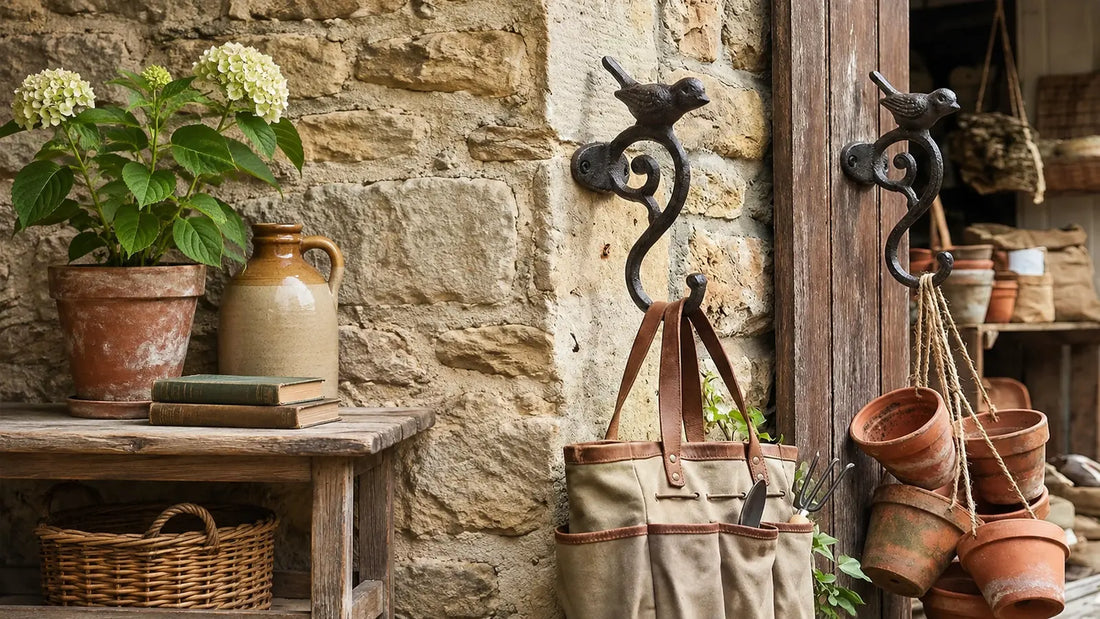
"Cast iron" and "wrought iron" are often used as if they meant the same thing, especially for hooks and garden ironwork. They do not. This guide to cast iron vs wrought iron explains the difference with sources from Historic England and government conservation guidance, shows how to tell the two apart, and lists exactly what our own hooks are made of, from the cast iron bird hook and the cast iron owl hook to the painted cast iron anchor hook and the stag and moose antler hook.
How cast iron and wrought iron are made
Cast iron is poured as a liquid into a mould; wrought iron is worked as a solid, heated and then hammered or rolled.
What is cast iron?
Historic England's archaeometallurgy guidelines describe cast iron as an iron alloy with roughly 2 to 5% carbon. That carbon lowers its melting point to about 1150–1300°C, so it can be melted and poured into moulds, most often made of sand. The same document notes that blast furnaces, which produce cast iron, arrived in Britain around 1500.
What is wrought iron?
Wrought iron is almost pure iron. Its melting point is much higher, around 1545°C according to Historic England, so instead of being melted it was forged into shape. From the 1790s it was made by puddling: molten pig iron was stirred so the carbon burned off, and the spongy lump was hammered and rolled into bars. The Government of Ireland's conservation guide Iron: The Repair of Wrought and Cast Ironwork describes the process step by step.
What was wrought iron used for? Much of it went into decorative work: Historic Environment Scotland notes that wrought ironwork tends to be ornate and delicate, with scrolls and foliage as common designs.
How they differ in look, feel and behaviour
Cast iron is hard, crystalline and brittle; wrought iron is fibrous, a little like wood grain, and easy to shape when hot.
The Northern Ireland Department for Communities' technical note on ferrous metals sums up cast iron as brittle, hard and non-malleable, with good strength in compression, and wrought iron as fibrous in appearance and worked with a hammer while still hot. The Irish guide adds a detail worth knowing at home: grey cast iron will shatter rather than bend after a sharp blow.
| Cast iron | Wrought iron | |
|---|---|---|
| How it is shaped | Melted and poured into a mould | Heated, then hammered or rolled while solid |
| Carbon | About 2 to 5% | Very little |
| Inside the metal | Hard and crystalline | Fibrous, with long strands of slag |
| Behaviour | Brittle: can crack or shatter if struck | Malleable: shaped by hammering and rolling |
| Typical details | Identical repeated motifs, crisp relief, a mould line | Tapering scrolls, delicate leafwork, small differences between parts |
| How parts are joined | Flanges, slots, lugs and hidden bolts | Rivets, collars and forge welds |
| Still made today? | Yes, by iron foundries | Not in the UK or Europe since 1974: recycled only |
Why most decorative hooks today are cast
Casting copies fine detail from one pattern again and again, and true wrought iron is no longer made.
The Irish guide explains that a casting starts with a pattern, traditionally carved in wood, pressed into sand to form a mould in two halves. Fine moulding sand captures a high level of detail, and one pattern can make many castings, each the same shape. That is how an owl's feathers or a bird's wing can stand out in relief on a hook from £19.99.
Wrought iron is a different story. The same guide records that the last puddling furnace in England closed in 1974, and that since then no wrought iron has been produced in Ireland, the UK or the rest of Europe. It is only available as recycled material, and mild steel is its most common substitute. So if new wrought iron coat hooks are offered for sale, it is worth asking the seller which metal they actually are.
Cast iron, on the other hand, is still widely available from iron foundries and still used for decorative ironwork, the Irish guide notes. Our cast iron antler coat rack shows what casting does well: the antlers and their tines are cast in iron in the shape of deer antlers, with a rust brown finish.
How to tell cast iron from wrought iron at home
To settle cast iron vs wrought iron on a real piece, look at repeats, mould lines and joints: identical motifs and lugs point to cast iron, hand-made variations and rivets to wrought iron.

The Irish conservation guide gives these clues. A trained eye can usually tell the difference, but some pieces need scientific analysis, so treat this as a first look rather than a verdict.
- Repeats. Pieces cast from one pattern are identical, with no variation from one element to the next. Hand-forged wrought iron shows slight differences between similar elements.
- Mould line. Moulds are usually made in two halves, so a cast piece often shows a faint line where they met.
- Joints. Cast parts are joined with flanges, slotted grooves and concealed bolts or pins. Wrought iron uses rivets, collars, forge welds and joints borrowed from joinery.
- Shapes. Tapering scrolls and delicate leafwork are typical of wrought iron. Wrought iron cannot be shaped by casting.
- Railings and gates. On wrought iron railings, the bars pierce the rails and their ends are hammered into small domes on the underside.
- Names. Foundries often cast their company name into a piece, at the base of a column or on a flat surface.
For a small hook, the repeat test is the easiest: two cast hooks of the same design should match line for line. The surface is another matter. Our cast iron hooks' pages explain that the surface has small natural irregularities and that tone and texture vary slightly from piece to piece, so two hooks match in shape but not always in shade.
What our hooks are made of
Our iron hooks are cast iron or, for the rustic iron range, iron with a rustic brown finish: none of them is wrought iron.
Here is the material line from each product page, with the size of each design. For a wider view of materials, sizes and spacing, see our wall hooks guide.
| Hook | Material on the page | Finish | Size (width × height) | Price |
|---|---|---|---|---|
| Bird wall hook | Cast iron | Rustic brown | 6.5 × 14.7 cm | from £19.99 |
| Owl wall hook (round, slim or three owls) | Cast iron | Rustic brown | 10 to 21.5 cm wide, 16 to 17 cm high | from £27.99 |
| Anchor wall hook | Cast iron | Painted and distressed: blue, red, white or brown | 9.5 × 11.3 cm | from £20.99 |
| Stag or moose antler hook | Cast iron | Rust brown | 33 × 28 cm or 35 × 20 cm | from £69.99 |
| Antler coat rack, crossed or spread | Cast iron | Rust brown | 34 × 14 cm or 37 × 16 cm | from £39.99 |
| Crown wall hook (3 designs) | Iron | Rustic brown, uneven by design | 8.5 to 9.2 × 11 cm | from £14.99 |
Our rustic iron crown hook and the rest of our rustic wall hooks are described on their pages as iron with a rustic brown finish, and that is all we claim for them. Every cast design is gathered in our cast iron coat hooks collection.
Whichever you choose, use fixings suited to the wall: masonry plugs in brick or block, wood screws into timber, cavity fixings or a stud in plasterboard. Check for hidden pipes and cables before drilling, and ask a qualified professional if in doubt. Our guide to fixing a coat rack to plasterboard covers hollow walls. Because cast iron is brittle, tighten the screws until the hook sits firm against the wall, then stop.
Does wrought iron rust? Rust and care
Yes, both irons rust, and wrought iron more readily: Historic Environment Scotland notes that cast iron has far better natural resistance to corrosion than wrought iron, which tends to bend and distort as it deteriorates.
For our cast iron hooks, the rule is simple: keep them dry, as their pages note that cast iron can rust if left damp. Wipe them with a dry cloth. The anchor hook's page recommends using it indoors or in a sheltered spot, and the antler coat rack's page adds that a light coat of clear wax helps in a porch. The rustic iron hooks need the same care: keep them dry to protect the finish. For hooks by a wet back door, our boot room and back door storage ideas show where to put them.
FAQ
What is the main difference between cast iron and wrought iron?
How they are shaped. Cast iron is melted and poured into a mould, while wrought iron is heated and hammered or rolled while still solid, which gives it a fibrous structure.
Which is more brittle, cast iron or wrought iron?
Cast iron. Conservation guidance describes it as hard but brittle, so it can shatter rather than bend after a sharp blow, while wrought iron is malleable.
Are wrought iron hooks still made?
True wrought iron has not been produced in the UK or Europe since 1974, according to the Government of Ireland's ironwork guide. It now exists only as recycled material, and mild steel is its most common substitute, so ask what a new "wrought iron" hook is really made of.
How can I tell if a hook is cast iron?
Look for identical repeats between hooks of the same design, crisp relief and sometimes a faint mould line where the two halves of the mould met. Wrought iron shows small hand-made differences, rivets and collars instead.
Are your hooks cast iron or wrought iron?
None of our hooks is wrought iron. Our iron hooks are cast iron, as stated on each product page, and our rustic iron range is described as iron with a rustic brown finish.
Which rusts more readily, wrought iron or cast iron?
Wrought iron. Both rust when they stay damp, but Historic Environment Scotland notes that cast iron has far better natural resistance to corrosion. Cast iron still rusts if left wet, so our product pages advise keeping cast iron hooks dry, with a light coat of clear wax for a hook in a porch.
In short: our picks
For a classic cast iron look by the front door, our pick is the bird wall hook (from £19.99), with the owl wall hook (from £27.99) for a boot room. For a feature above a fireplace or a bench, the stag and moose antler hook (from £69.99) shows off what casting does best. See every design in our cast iron coat hooks collection.
Shop Cast Iron Coat Hooks
See all-
Moustache Wall Hook in Black Cast Iron
Regular price £19.99Save 15% on orders of £30+ -
Cast Iron Deer Head and Small Antler Wall Hook in Rust Brown
Regular price From £27.99Save 15% on orders of £30+ -
Cast Iron Antler Coat Rack in Rust Brown (2 Designs)
Regular price£39.99Black Friday price From £33.99 Save 15% -
Dragon Wall Hook in Rustic Cast Iron
Regular price £23.99Save 15% on orders of £30+


